
Our Approach
Chaupal’s work is guided by a simple but fundamental principle: sustainable change in tribal regions must be led by the communities themselves.
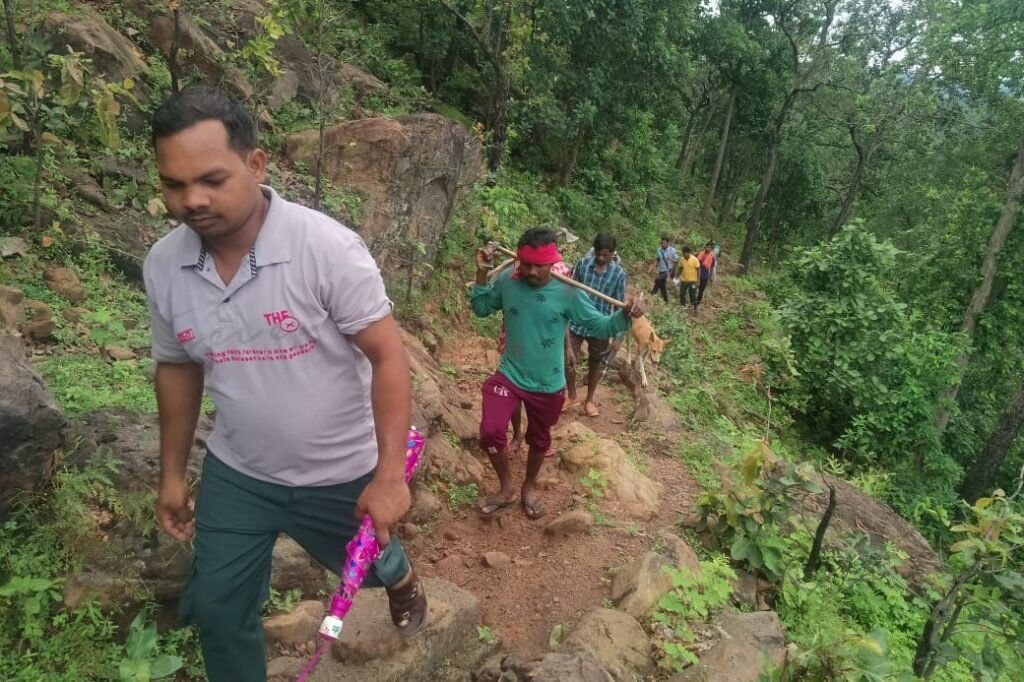
As an organization largely run by Adivasis and for Adivasis, our team—including staff, volunteers, and leadership—comes from the same communities we work with, such as the Oraon, Kanwar, Gond, Manjhi, Majhwar, Pahadi Korwa, and Pando. This shared social and cultural context enables deep trust, mutual understanding, and long-term engagement with communities.
Community-Led and Participatory
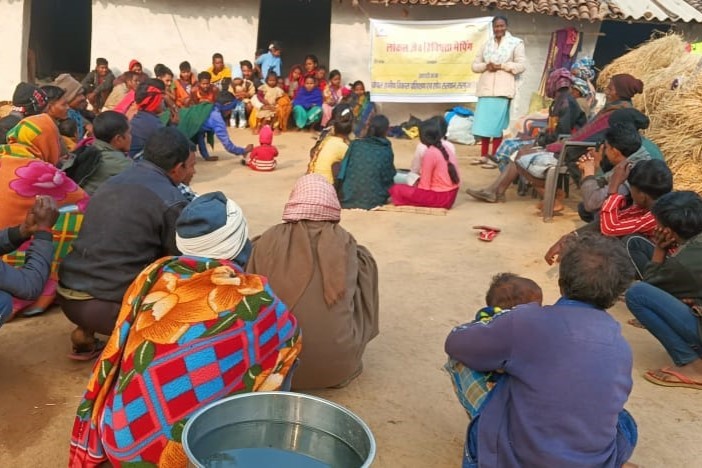
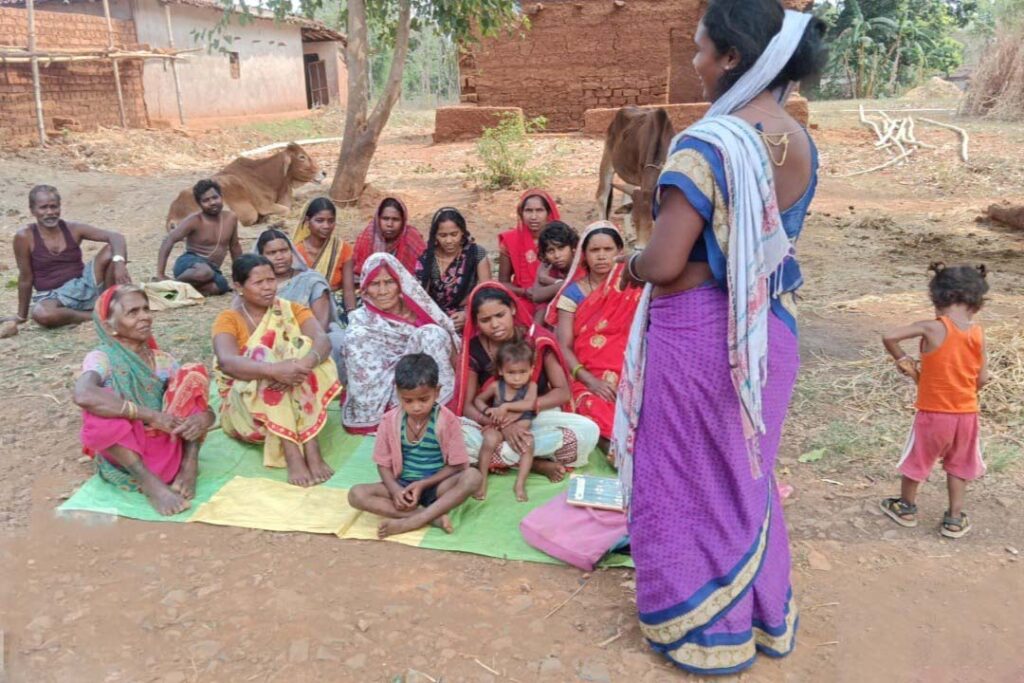
Community participation and collective decision-making lie at the core of Chaupal’s approach. Our programmes are designed through consultations with communities, discussions in gram sabhas, and participatory rural appraisal exercises. This process ensures that priorities emerge from the ground and reflect the lived realities of Adivasi households.
We work to strengthen community-based organizations, gram sabhas, and panchayats so they can actively plan, monitor, and implement development initiatives. A strong cadre of community volunteers works closely with these institutions to support people in accessing welfare entitlements, implementing poverty alleviation and developmental programmes, monitoring public services, and participating meaningfully in local governance.
Through sustained community mobilization, awareness building, and institutional strengthening, Chaupal supports Adivasi communities in securing their rights to food, employment, healthcare, social security, and land and forest resources. Our work also emphasizes community monitoring and public accountability to ensure that government programmes reach those who need them most.
Learning, Adaptation, and Innovation
Chaupal continuously adapts its programmes to respond to emerging challenges in tribal regions. Since its inception, Chaupal’s work has evolved in response to the changing realities of Adivasi communities in northern Chhattisgarh. While our early engagement focused primarily on rights-based mobilization and strengthening access to entitlements, our approach has gradually expanded to include livelihood resilience, need to address climate variability, natural resource management, health, nutrition, early childhood development, youth development and public service delivery. This evolution reflects our commitment to addressing emerging challenges while keeping community leadership and local governance at the center of our work.
Partnerships and Collaboration
Chaupal believes that sustainable change requires collaboration across sectors. We work closely with government departments, civil society organizations, donor agencies, and grassroots networks to strengthen service delivery, improve programme implementation, and advocate for policy reforms that benefit Adivasi communities.
An Adaptive and Community Rooted Model
Together, these efforts reflect the evolution of Chaupal’s approach—from a focus on rights advocacy to an integrated model that connects governance, livelihoods, natural resources, health, nutrition, early childhood development and public systems. While our areas of work have expanded over time, our core philosophy remains unchanged: communities must lead their own development.
By continuously learning from the ground and adapting to emerging challenges, Chaupal strives to build resilient communities, responsive institutions, and sustainable development pathways for Adivasi regions of northern Chhattisgarh.