
The Challenge of Access
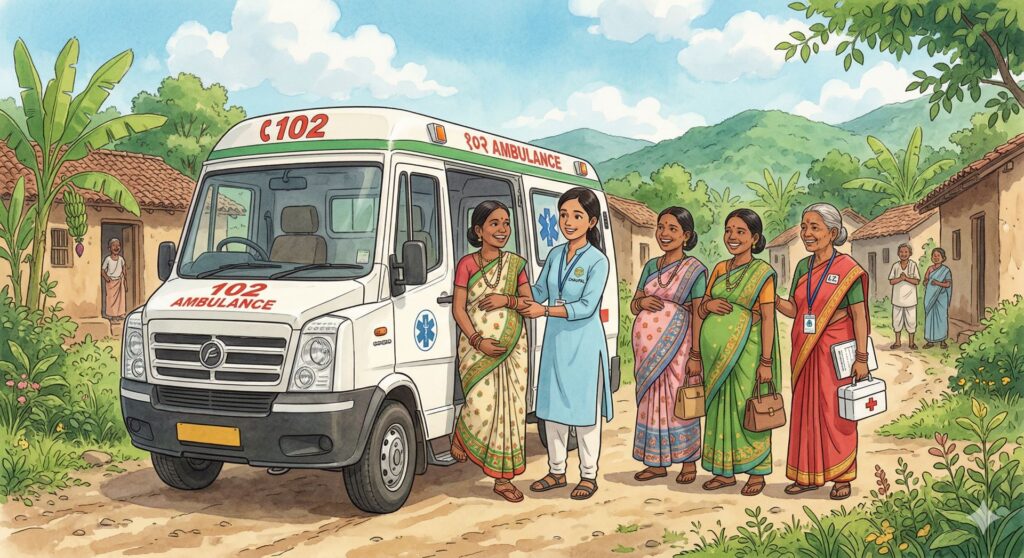
In the village of Asandih, situated approximately 10 kilometres from the Dhaurpur Primary Health Centre, geographic isolation remains a significant barrier to maternal safety. Recently, three pregnant women from the village required transport for their routine antenatal check-ups. Accompanied by the village health volunteer (Mitanin Didi), they waited for several hours for an ambulance that failed to arrive, eventually leading them to start the long walk back to their homes in disappointment.
A Critical Intervention
The situation changed when a Chaupal project worker, who was in the village for a routine home visit, encountered the group. Upon learning of the transport failure, the worker took immediate action by dialling the ‘102’ emergency service. Due to this prompt coordination, an ambulance arrived within thirty minutes to transport the women to the health centre safely.
Vital Health Outcomes
The subsequent medical examinations proved essential for the well-being of both the mothers and their unborn children. The check-ups revealed that:
- Two of the women were suffering from anaemia.
- The third woman was diagnosed with a fever.
The women were provided with the necessary medication and were later driven back to their homes by the ambulance.
The Power of Local Leadership This incident serves as an excellent example of how the quick thinking and active initiative of community health workers can bridge the gap between remote populations and essential public services. By ensuring timely access to maternal healthcare, such small-scale interventions drive significant improvements in health equity and maternal safety across the region.