
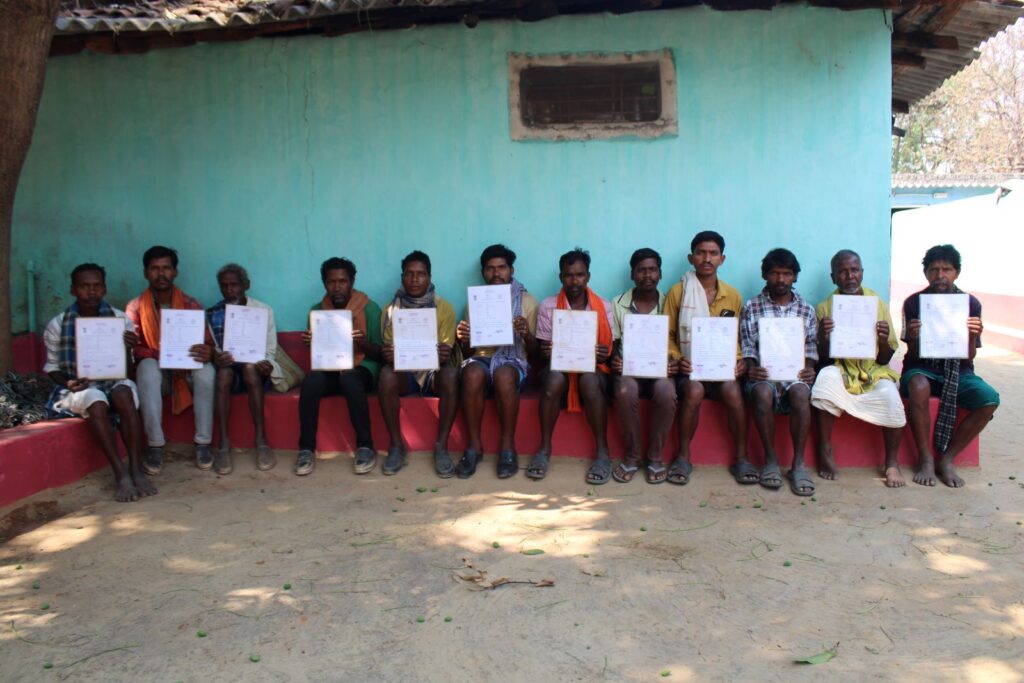
For generations, forest-dwelling communities have lived in deep connection with their land, deriving not only their livelihoods but also their identity and cultural roots from it. Yet, for decades, these very communities remained excluded from legal ownership of the lands they nurtured. The Scheduled Tribes and Other Traditional Forest Dwellers (Recognition of Forest Rights) Act, 2006 (FRA) was enacted to correct this historic injustice, recognizing both Individual Forest Rights (IFR) and Community Forest Rights (CFR).
However, the promise of FRA has not fully translated into reality. In Chhattisgarh, as of December 2025, while 4.81 lakh individual forest rights have been recognized against 8.90 lakh claims filed, nearly 46% of claims remain rejected or pending. The gap between policy and practice is stark, and it is the most marginalized who bear its weight.
Among them are the Pahadi Korwa, a Particularly Vulnerable Tribal Group (PVTG) residing in the remote, hilly terrains of Surguja district in northern Chhattisgarh. In villages like Bhakurma, located in the Udaipur block of Surguja, the challenges are especially acute. Isolated by geography and systemic neglect, the community faces severe barriers, extremely low literacy levels, limited access to formal systems, and deep economic vulnerability. In some pockets, literacy is as low as 0.6%, leaving most families unaware of their rights and entitlements under the FRA. The absence of formal land records further compounded their exclusion, often leading to rejection of their claims.
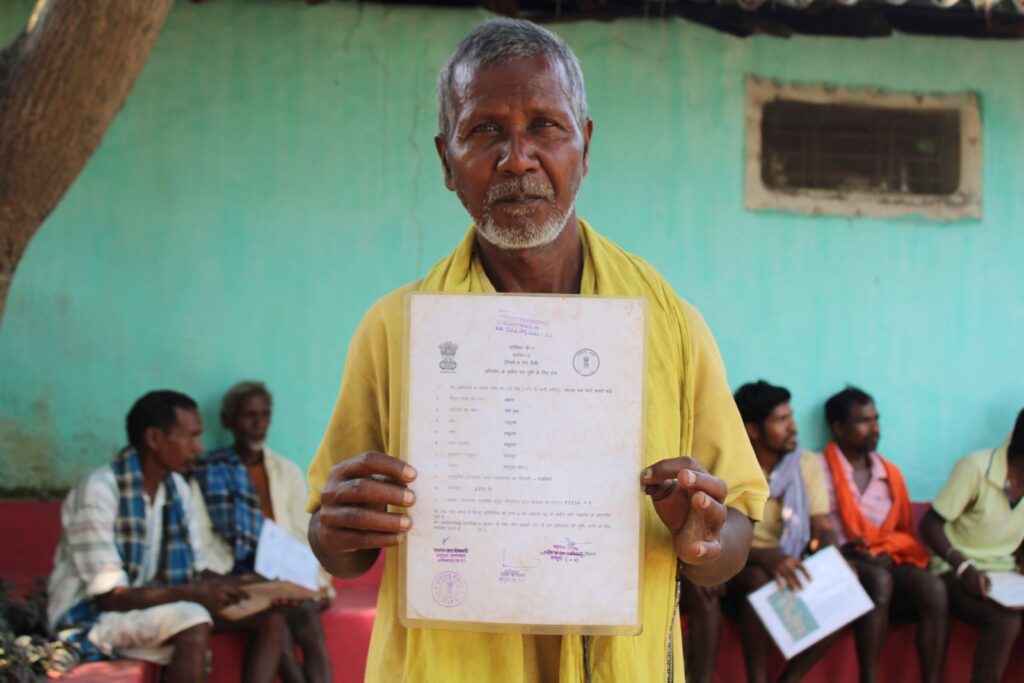
It was within this context that Chaupal Gramin Vikas Evam Prashikshan Sanstha stepped in, determined to bridge the gap between rights and reality. Recognizing that conventional approaches would not suffice, Chaupal adopted a focused and innovative strategy tailored to the unique challenges of the Pahadi Korwa community. To overcome the critical barrier of documentation, Chaupal conducted extensive GPS-based surveys of individual agricultural and residential lands. In Surguja district, forest land cultivated by 1873 households belonging to Pahadi Korwa community was mapped using GPS technology, creating reliable and evidence-based records of land possession. Trained karykartas meticulously mapped these land parcels, establishing proof that families had been residing on and cultivating these lands prior to the FRA cut-off date of 13th December 2005. These GPS-generated records proved instrumental in strengthening claims and navigating complex bureaucratic processes.
At the same time, Chaupal worked closely with the community by conducting regular meetings, organizing trainings, and providing continuous handholding support to build awareness around forest rights. Through these sustained efforts, Pahadi Korwa families were able to understand their rights under FRA and actively engage in the claims process. Forest Rights Committees (FRCs) were formed and strengthened, and Gram Sabha members were trained on claim procedures, documentation, and verification processes. This consistent engagement ensured that the community was not merely informed but empowered to take ownership of the process.
The impact has been profound. 1480 Pahadi Korwa households successfully received Individual Forest Rights (IFR) titles, with many PVTG households such as those in Bhakurma village receiving their titles in the year 2022. For these families, land ownership is far more than a legal document it is a pathway to dignity, security, and hope for a better future.
This journey is a powerful reminder that meaningful change is possible when communities are supported with the right mix of awareness, technical innovation, and institutional strengthening. It underscores the importance of ensuring that the most vulnerable are not left behind, and that progressive legislations like the FRA truly reach those they were meant to empower. In restoring land rights, Chaupal is not just implementing a law it is rebuilding lives, reaffirming dignity, and enabling one of the most marginalized communities to step into a future of greater security and self-reliance.