
The Challenge of Isolation
In the remote village of Asandih, within the Lundra block, the distance to the nearest primary health centre or district hospital was once a significant barrier to care. Because professional medical facilities were so far away, villagers frequently sought help from local unregistered practitioners or traditional sorcerers. This often led to devastating results: families spent their meagre savings on fraudulent treatments that offered no actual relief from their illnesses.
A Shift in Awareness
Witnessing the community’s distress and the cycle of financial exploitation, Chaupal’s project workers began an intensive awareness campaign. They worked to educate the community on the long-term benefits of evidence-based medical care and the availability of affordable services at government facilities and non-profit institutions like Sangwari Hospital.
The Power of Collective Action
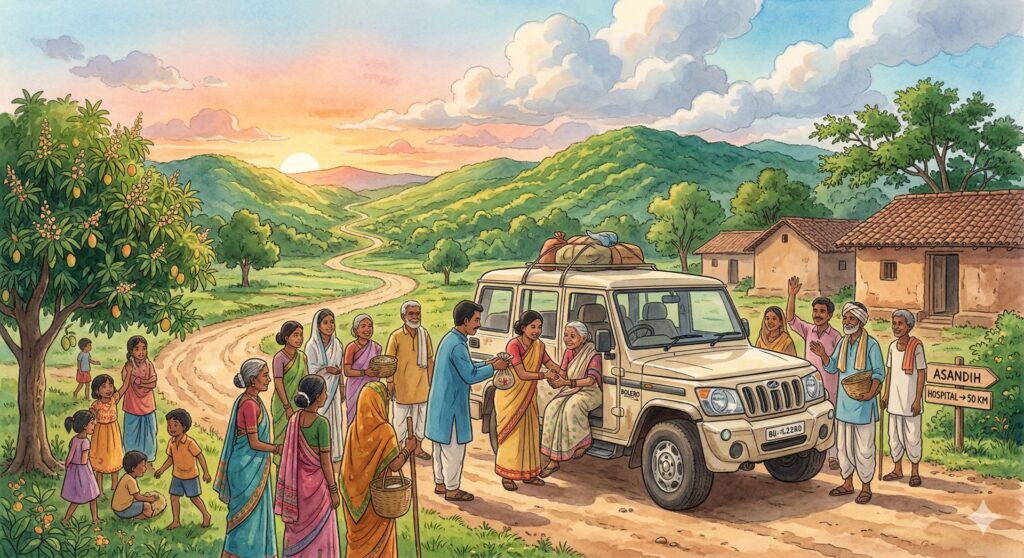
The result of this intervention was more than just a change in healthcare choices; it was a revolution in community unity. Today, the residents of Asandih no longer face medical emergencies alone. When someone falls ill, the “para” (hamlet) gathers to discuss the situation. Together, they:
- Pool Financial Resources: Neighbours collect money amongst themselves to cover the costs of transportation.
- Organise Transport: They collectively book a vehicle, ensuring that geographic distance is no longer a death sentence.
- Ensure Safety: Members of the community often travel together to the hospital, supporting the patient through their treatment and ensuring their safe return to the village.
Through this self-sustaining model of mutual aid, the people of Asandih have reclaimed their right to health, moving from a state of desperation to one of organised, community-led resilience.