
Water and Livelihood
Empowering tribal farmers in northern Chhattisgarh with sustainable agriculture, water security, and diversified livelihoods for resilience and growth.
The northern districts of Chhattisgarh are predominantly inhabited by Adivasi communities and small and marginal farmers whose livelihoods are closely dependent on rain-fed agriculture, forests, and natural resources. Agriculture in this region remains largely subsistence-based and highly dependent on the monsoon, with limited irrigation facilities and inadequate water harvesting infrastructure. Erratic rainfall, undulating terrain, and rapid runoff of rainwater often result in seasonal water scarcity, low cropping intensity, and frequent crop losses.
Most farmers cultivate small and fragmented landholdings, often on uplands with poor soil fertility, which further constrains productivity. Limited access to quality agricultural inputs, extension services, institutional credit, and markets compounds these challenges. As a result, farm yields and incomes remain low, and many households depend on seasonal wage labour, migration, or collection of minor forest produce for survival.
Geographic isolation, weak infrastructure, and environmental pressures on forests and natural resources further increase vulnerability. In recent years, climate change has significantly affected agriculture in the region, leading to erratic monsoons, limited irrigation options, and poor land development. These challenges have reduced productivity, particularly for small and marginal farmers who depend on rain-fed agriculture. In this context, strengthening water security, improving sustainable agricultural practices, and promoting diversified livelihoods are critical to enhancing food security, income stability, and climate resilience among Adivasi and smallholder farming communities in northern Chhattisgarh.
Projects
High Impact Mega Watershed Project
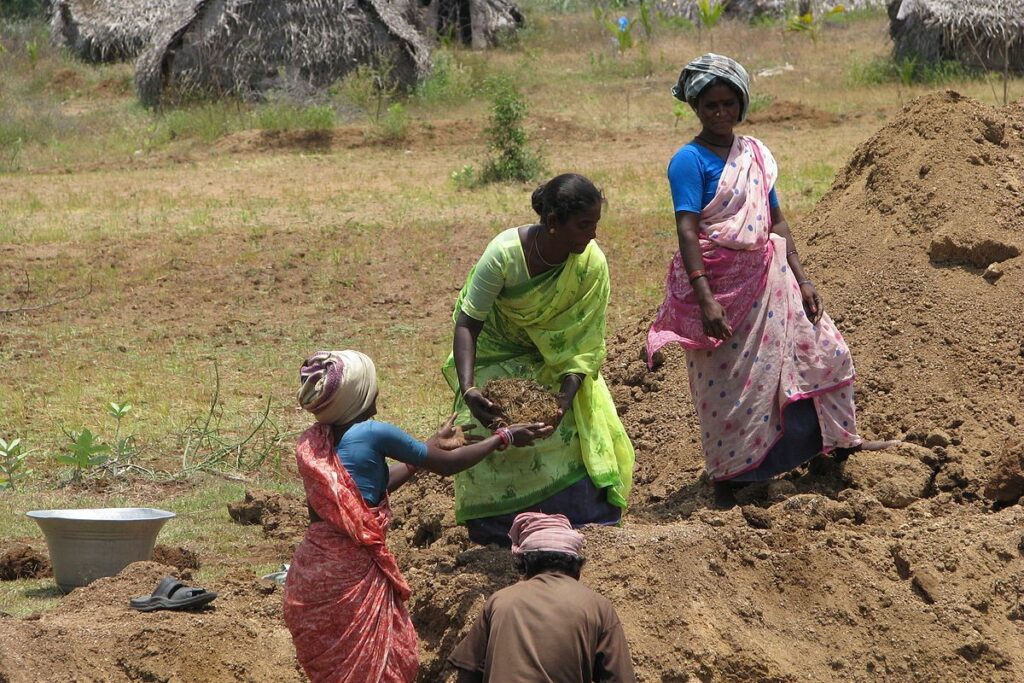
Since 2018, Chaupal has been implementing a watershed and livelihood project in 84 villages across the Lakhanpur and Batauli blocks of Surguja district with the financial support of the Bharat Rural Livelihood Foundation (BRLF). The project focuses on improving water resource management by providing technical assistance to communities and strengthening catchment areas.
To address these issues, the project promotes watershed development and sustainable livelihood practices in collaboration with BRLF and the State MNREGA Cell. The initiative focuses on creating natural resource management (NRM) assets, improving water availability, and enabling farmers to adopt diverse income-generating activities. Through this initiative, Chaupal aims to increase the income of 2,500 small and marginal farmer households, strengthen community institutions, promote women’s participation, build the capacity of local stakeholders, and support farmers through agricultural production clusters and improved land and water management practices.
Jal Jeevan Mission (Partner Chhattisgarh State Government)
Chaupal is supporting the implementation of the Jal Jeevan Mission, a Government of India initiative aimed at ensuring safe and sustainable drinking water for every rural household and public institution, including schools, Anganwadi centres, health centres, and Gram Panchayat buildings. In Surguja district of Chhattisgarh, Chaupal is implementing this project in 207 villages of Lakhanpur block and Lundra block in collaboration with the Public Health Engineering Department and the Department of Drinking Water and Sanitation. The project focuses on community awareness and participation to promote safe drinking water practices and strengthen local capacity for sustainable water management, contributing to the mission’s vision of “Har Ghar Jal” – safe drinking water for every rural household.